01
What government help is there for first home buyers?
More than most people realise. The big three federal schemes, run by Housing Australia, are:
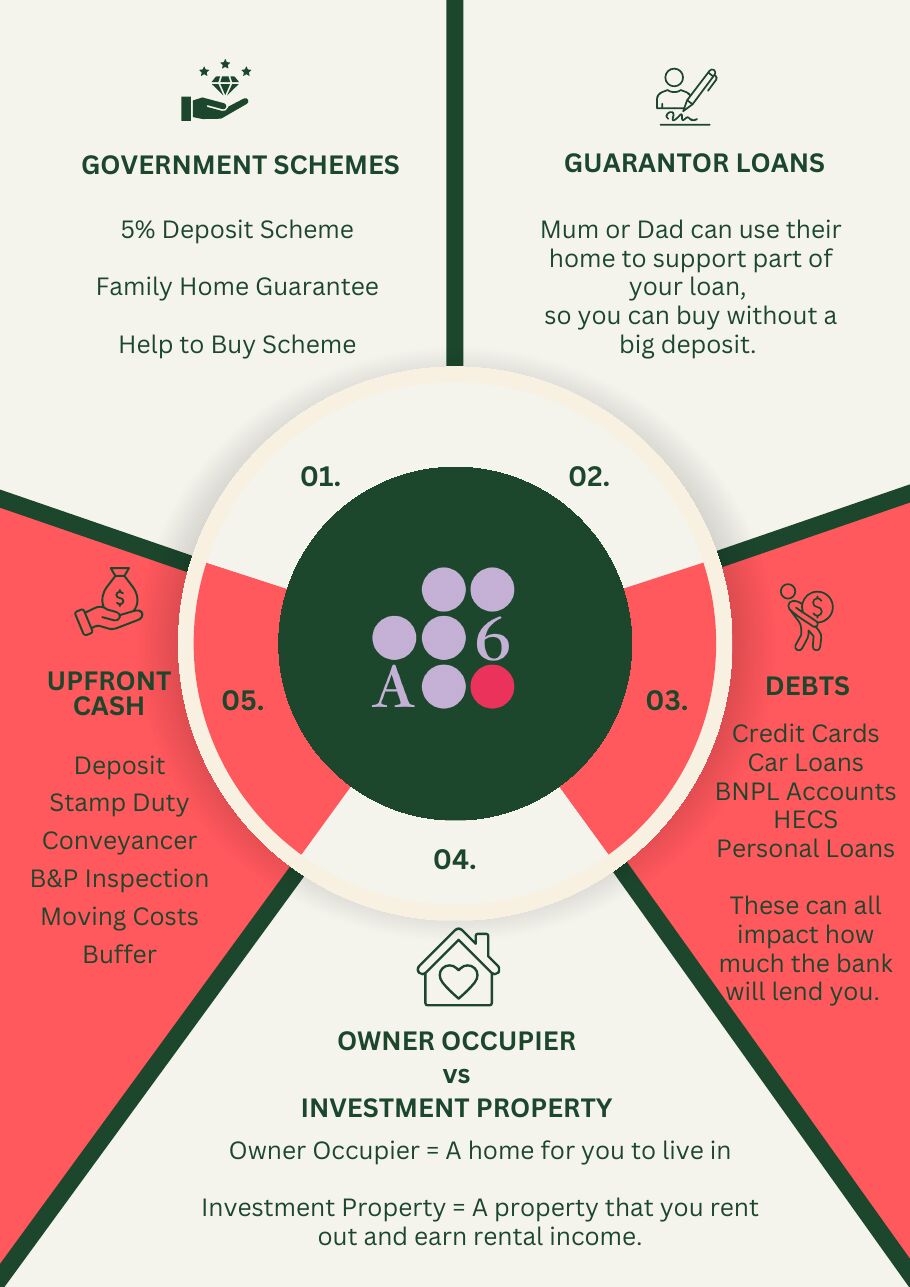
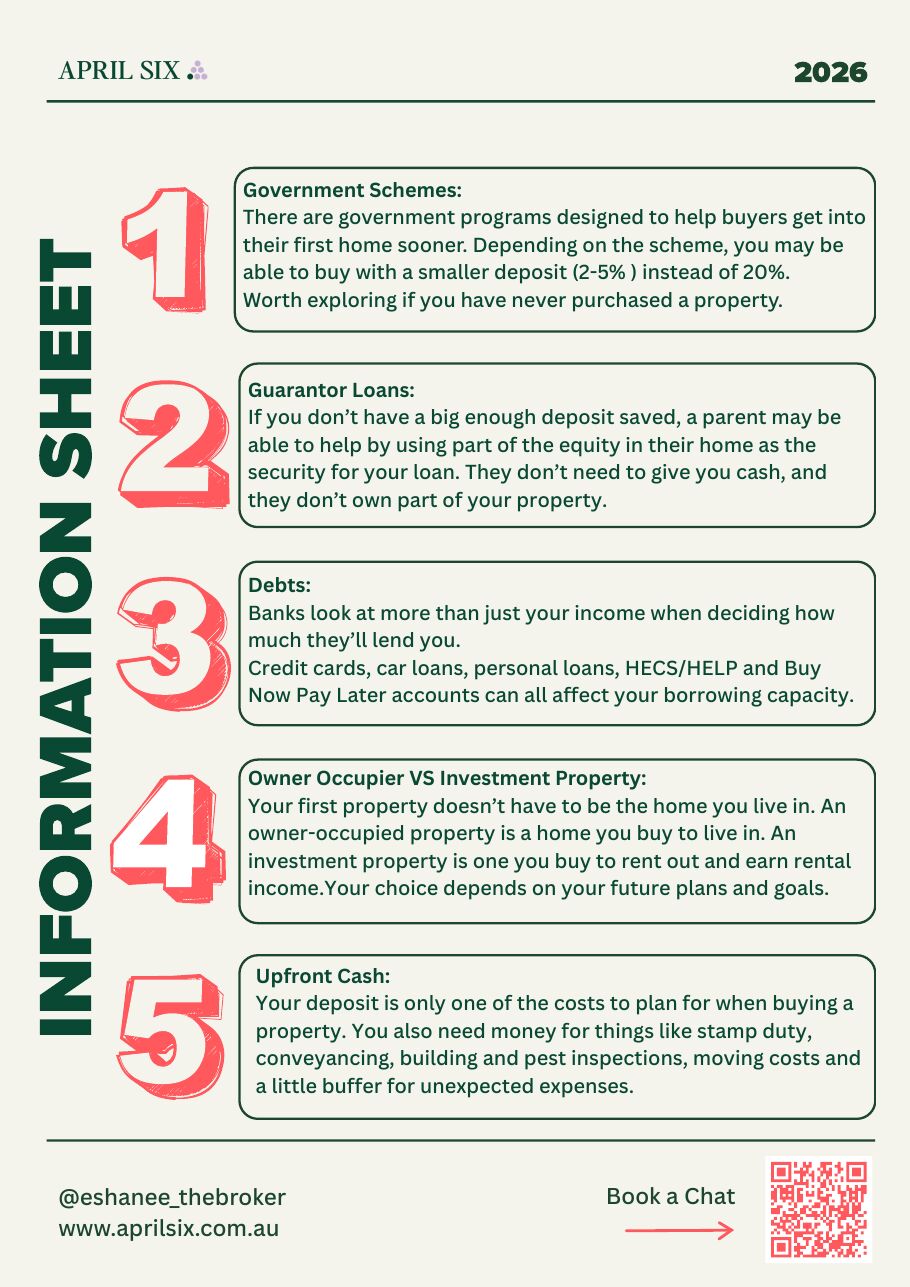
- 5% Deposit Scheme (the First Home Guarantee). Buy with a 5% deposit and skip Lenders Mortgage Insurance.
- Family Home Guarantee. For eligible single parents and guardians, with as little as 2% down.
- Help to Buy. A shared equity scheme where the government owns part of your home alongside you.
Then there are state first home buyer grants, like the First Home Owner Grant for new homes, and stamp duty concessions. These change depending on where you buy and whether the home is new.
In the guideAll three schemes at a glance, and how they could take your deposit from 20% down to as little as 2 to 5%.
02
Can my parents help me buy without giving me cash?
Yes. With a guarantor loan, a parent uses some of the equity in their own home as extra security for your loan. No cash changes hands and they do not own part of your property.
It can mean buying with a tiny deposit, or none, and often without paying Lenders Mortgage Insurance. It is also a real commitment for your parents, so everyone needs to understand it going in.
In the guideHow a guarantor loan works, explained simply enough to share with Mum or Dad.
03
How do my debts affect how much I can borrow?
Banks look at much more than your salary. Your borrowing power (how much a bank will lend you) gets chipped away by:
- Credit cards, even ones you pay off every month
- Buy Now Pay Later accounts like Afterpay
- Car loans and personal loans
- HECS or HELP debt
The good news: a bit of tidying up before you apply can make a real difference.
In the guideA one page cheat sheet of what banks check, to read before you apply.
04
Should my first property be a home or an investment?
Your first property does not have to be the one you live in. An owner occupied property is a home you live in. An investment property is one you rent out for rental income.
Some people buy an investment first and keep renting where they love living. That is called rentvesting, and I wrote about it in what rentvesting is and who it suits. The right choice comes down to your plans, not a rule.
In the guideThe difference side by side, so you can weigh up which fits your plans.
05
How much cash do I need on top of the deposit?
This is the one that catches people out. Your deposit is just the start. You will also need to budget for things like stamp duty (if it applies) and conveyancing before you get the keys.
If you are still working out the deposit side, my post on how much deposit you need to buy a home in Australia walks through it.
In the guideThe full checklist of upfront costs, including the ones people forget.